




Wilderness & Austere Medicine


.png)
.png)
.png)
Advanced Rescue Solutions follows the Certification Policies of ECSI The Emergency Care And Safety Training Institute's programs that are offered in association with as well as peer reviewed by the American Academy of Orthopedic Surgeons and the American College of Emergency Physicians—two of the most renowned medical organizations in the world. These organizations provide medical direction to ECSI and stand behind the content of our training materials. In addition our BLS & CPR Courses follow the ILCOR Committee Standards.
Why Choose Advanced Rescue Solutions?
The WFR is a major investment of time and money. Advanced Rescue Solutions is the preferred choice for Ontario-based professionals for several critical reasons:
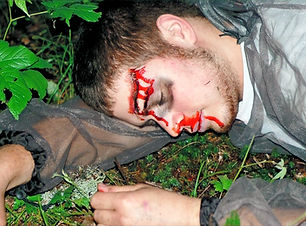
High-Stakes Realism: Advanced Rescue Solutions doesn't just use bandages; they use advanced moulage (theatrical makeup) and professional-grade simulations to mimic the "gore" and stress of real trauma. This desensitizes you to the shock of an injury so you can focus on the medicine.
Expert Instructors: Their WFR instructors aren't just teachers; they are often active First Responders, They teach you the "why" behind every protocol based on decades of field experience.
Toronto-Accessible Training: While many providers force you to travel 4+ hours north, Advanced Rescue Solutions often utilizes rugged pockets within the GTA (like the Don Valley or Rouge National Urban Park) for simulations, making elite training accessible to city-dwellers.
The "Duty to Act" Focus: Advanced Rescue Solutions training emphasizes leadership. You aren't just learning how to wrap a knee; you are learning how to manage a panicked group, coordinate with helicopter pilots, and make the $10,000 "go/no-go" evacuation decision.
Lifetime Alumni Support: Graduates often gain access to Advanced Rescue Solutions network of outdoor professionals, recertification reminders, and updates on changing wilderness medical protocols.


Basic Wilderness First Aid
Advanced Wilderness First Aid
Wilderness First Responder WFR

Basic Wilderness First Aid
When you’re hours away from the nearest hospital, the rules of first aid change.

Advanced Wilderness First Aid
When seconds count but help is hours or even days away, standard first aid isn't enough.

Wilderness First Responder WFR
The Wilderness First Responder (WFR) course is the definitive "gold standard"
Feature
Duration
Spine Care
Dislocations
Medical Kit
Evac Decisions
WFA (Basic)
16 Hours
Stabilization
No Reduction
Personal/Store-bought
Basic Go/No-Go
Feature
Duration
Spine Care
Dislocations
Medical Kit
Evac Decisions
WAFA (Advanced)
36–40 Hours
Clinical Clearing
Selected Reduction
Group/Pro-Kit
Detailed SOAP Plan
Feature
Duration
Spine Care
Dislocations
Medical Kit
Evac Decisions
WFR (Responder)
72–80 Hours
Long-term
Full WMS Reduction
Oxygen/Medication/ AED
Complex SAR Evac

Basic Wilderness First Aid
When you’re hours away from the nearest hospital, the rules of first aid change. Advanced Rescue Solutions offers a Basic Wilderness First Aid (WFA) course in Toronto designed for those who venture where a 911 call won’t result in an immediate response. This course bridges the gap between urban first aid and the realities of the backcountry.
Course Description
The Basic Wilderness First Aid course is an intensive, hands-on program that focuses on stabilizing injuries and managing medical emergencies with limited resources. Unlike standard first aid, which assumes help is minutes away, this course teaches you how to provide extended care for up to 24 hours. This Basic Wilderness First Aid (WFA) course is based on the Wilderness Medical Society (WMS) "Minimum Guidelines and Scope of Practice" and their clinical practice guidelines.
A standard WFA course is typically 16 hours (2 days) and focuses on the most common wilderness injuries and illnesses where definitive medical care is delayed (typically 1+ hours away).
Key Learning Modules:
-
The Patient Assessment System: A systematic way to determine what is wrong when a patient can't tell you.
-
Environmental Emergencies: Specialized training for hypothermia, heat stroke, lightning strikes, and high-altitude issues.
-
Trauma Management: Learning to manage spinal injuries, fractures, and large wounds using improvised tools (like using a backpack or jacket to create a splint).
-
Decision Making: Critical training on when to "stay and play" versus when to initiate a high-stakes evacuation.
-
CPR & AED: Includes Adult and Child
Target Audience
This course is specifically designed for:
-
Outdoor Enthusiasts: Hikers, canoeists, mountain bikers, and campers who recreate in Ontario’s provincial parks or Crown land.
-
Field Workers: Professionals in forestry, geology, or environmental research working in remote sites.
-
Youth Leaders: Scout leaders, camp counselors, and Duke of Edinburgh participants.
-
Urban Preparedness: Anyone interested in being self-sufficient during natural disasters when emergency services are overwhelmed.
Pricing (Toronto, Ontario)
-
Course Fee: $225 + HST
-
Includes: 3 year certification.
-
Note: Group rates and corporate on-site training are available upon request for organizations.
This curriculum outline for a Basic Wilderness First Aid (WFA) course is based on the Wilderness Medical Society (WMS) "Minimum Guidelines and Scope of Practice" and their clinical practice guidelines.
A standard WFA course is typically 16 hours (2 days) and focuses on the most common wilderness injuries and illnesses where definitive medical care is delayed (typically 1+ hours away).
Day 1: Assessment and Trauma
Module 1: Introduction to Wilderness Medicine
-
Definition & Scope: How wilderness medicine differs from urban EMS (delayed transport, limited resources, environmental factors).
-
Legal Considerations: Good Samaritan laws, consent, and duty to act.
-
Preparation & Prevention: Trip planning, gear selection, and medical kits.
Module 2: Patient Assessment System (PAS)
-
Scene Size-Up: Safety, mechanism of injury (MOI), and number of patients.
-
Primary Assessment: The "ABCs" (Airway, Breathing, Circulation) + Disability/Deformity (Spine) and Environment.
-
Secondary Assessment: * Physical Exam: Head-to-toe "blood sweep" and detailed check.
-
Vital Signs: Level of consciousness (LOR), heart rate, respiratory rate, skin signs.
-
Patient History: Using the SAMPLE acronym (Signs/Symptoms, Allergies, Medications, Past History, Last Out, Events).
-
Module 3: Basic Life Support (BLS) in the Wilderness
-
WMS CPR Protocols: When to start and when to stop CPR in remote settings (the "30-minute rule").
-
Airway Management: Recovery position and clearing obstructions.
Module 4: Traumatic Injuries (Part 1)
-
Wound Management (WMS Protocol): * Pressure irrigation with "drinkable" water.
-
High-risk wound identification (bites, deep punctures).
-
Wound closure (to tape or not to tape).
-
-
Hemorrhage Control: Direct pressure, pressure bandages, and the WMS-approved use of tourniquets.
-
Burns: Rule of nines, cooling, and dressing.
Module 5: Traumatic Injuries (Part 2)
-
Musculoskeletal Injuries: Distinguishing between stable and unstable injuries (fractures vs. sprains).
-
Splinting: Principles of immobilization and improvising splints from gear.
-
Dislocations: Wilderness protocols for reducing simple shoulder, patella, and finger dislocations (often taught as an elective or advanced WFA topic).
Day 2: Environmental and Medical Emergencies
Module 6: Spinal Cord Protection (WMS Protocol)
-
Spine Assessment: Determining when to protect the spine based on MOI vs. clinical signs.
-
Focused Spine Assessment: How to "clear" a spine in the field if the patient meets specific criteria (reliable patient, no distracting injuries, etc.).
-
Patient Packaging: Techniques for moving a patient with a suspected spinal injury.
Module 7: Environmental Emergencies
-
Hypothermia: Prevention, recognition, and the "Hypothermia Wrap" (Burrito).
-
Heat Illness: Heat exhaustion vs. life-threatening Heat Stroke.
-
Altitude Illness: Recognition of AMS, HAPE, and HACE; the primary treatment (descent).
-
Lightning: Safety protocols and triage for lightning strike victims.
-
Submersion: Drowning management and cold-water considerations.
Module 8: Medical Emergencies
-
Anaphylaxis (WMS Protocol): Recognition and the use of Epinephrine (auto-injectors and vial/syringe).
-
Cardiac/Respiratory: Managing Chest Pain (Aspirin/Nitro) and Asthma (Inhalers/Epinephrine for severe cases).
-
Altered Mental Status: Diabetic emergencies (hypoglycemia), seizures, and "the umbles."
-
Allergies & Toxins: Snake bites (no suction/ice), spider bites, and plant-induced dermatitis.
Module 9: Evacuation & Leadership
-
Decision Making: Determining "Go" (non-urgent) vs. "No-Go" (urgent) evacuations.
-
Communication: Writing a SOAP Note (Subjective, Objective, Assessment, Plan) and giving a radio report.
-
Litter Construction: Basic improvised litters and carries.
Module 10: Final Scenario & Practical Exam
-
Realistic Simulations: Integration of all skills in a wilderness scenario using "moulage" (stage makeup) for realism.
-
Written Exam: Testing core knowledge based on WMS guidelines.
Key WMS-Specific Protocols Integrated:
-
Spine Clearing: Following the updated WMS Clinical Practice Guidelines for Spinal Cord Protection.
-
Wound Cleaning: Emphasis on high-pressure irrigation and debridement in the field.
-
Anaphylaxis: Broad authority to use Epinephrine for life-threatening reactions.
-
CPR Termination: Clear criteria for when to cease resuscitation in remote areas.
visit advancedrescuesolutions.ca.


Advanced Wilderness
First Aid
When seconds count but help is hours—or even days—away, standard first aid isn't enough. In the rugged landscapes of Ontario, from the deep woods of Algonquin to the remote shores of Lake Superior, being prepared means having the skills to manage complex medical emergencies in the wild.
This Wilderness Advanced First Aid (WAFA) curriculum is designed as a 36–40 hour (4-day) intensive course. It builds upon the Basic WFA by adding greater depth to pathophysiology, long-term patient care (managing a patient for 24+ hours), and advanced decision-making protocols.
This outline strictly adheres to the Wilderness Medical Society (WMS) Clinical Practice Guidelines.
The Advanced Wilderness First Aid (AWFA) course is a 40-hour intensive program designed to transform outdoor enthusiasts into capable backcountry responders.
Course Description
The Advanced Wilderness First Aid course (often referred to as WAFA or AWFA) is a deep dive into remote medicine. While a basic course focuses on stabilization for a few hours, the Advanced level prepares you for extended care (24–72 hours).
Key Learning Modules include:
-
Advanced Patient Assessment: Mastering the "Head-to-Toe" exam to find hidden injuries when a patient is non-communicative.
-
Long-Term Wound Management: Techniques for cleaning, dressing, and monitoring wounds over multiple days to prevent infection.
-
Dislocation & Fracture Management: Learning when and how to "reduce" (reset) certain dislocations and how to build high-strength improvised splints.
-
Environmental Critical Care: Managing severe hypothermia, heat stroke, high-altitude sickness, and lightning strike triage.
-
Litter Packaging & Evacuation: Hands-on practice with improvised stretchers and the physics of moving a patient over rough terrain.
-
Pharmacology in the Field: Understanding the administration of common backcountry medications and epinephrine.
Target Audience
This course is specifically built for those who take leadership roles or venture into high-risk environments:
-
Professional Guides: Canoe trip leaders, hiking guides, and whitewater instructors.
-
Remote Field Workers: Geologists, forestry technicians, and researchers working in the "bush."
-
Serious Backcountry Explorers: Backpackers and winter campers who travel in small groups where every member must be a "medic."
-
Search and Rescue (SAR) Members: Individuals looking to join or enhance their skills within volunteer SAR teams.
Pricing (Toronto, Ontario)
Based on current rates for high-level wilderness training in the GTA:
-
Course Fee: $455.00+ HST.
-
Included: 3 year certification - All simulation supplies.
-
Note: Group rates and corporate on-site training are available upon request for organizations.
Day 1: Advanced Assessment & Vital Sign Trends
Module 1: The Physiology of Wilderness Medicine
-
The WAFA Mindset: Shifting from "first aid" to "remote medical management."
-
Homeostasis & Shock: Deep dive into compensated vs. decompensated shock (Pathophysiology).
-
Legal & Ethical: Scope of practice for advanced providers and duty to act.
Module 2: The Master Patient Assessment System (PAS)
-
Primary Survey: Advanced airway management (suctioning, adjuncts if applicable).
-
Secondary Survey: Detailed physical exam techniques for identifying "hidden" internal injuries.
-
Vital Sign Trending: Analyzing changes in vitals over time to predict patient decline.
-
Advanced SOAP Reporting: Comprehensive documentation for hand-off to Search and Rescue (SAR).
Day 2: Advanced Trauma & WMS Injury Protocols
Module 3: Wound Management & Infection Control
-
Debridement: WMS protocols for cleaning contaminated wounds in the field.
-
Advanced Closure: Use of Steri-Strips, staples, or Tincture of Benzoin for high-tension areas.
-
Infection Management: Recognizing systemic infection (sepsis) and field management.
-
Impaled Objects: Protocols for removal vs. stabilization (WMS guidelines on fishhooks and arrows).
Module 4: Musculoskeletal & Dislocation Reductions
-
Fracture Management: Traction splinting for femur fractures (improvised).
-
WMS Dislocation Protocol: * Techniques for reducing shoulders (Cunningham or Stimson).
-
Reducing patella and digit dislocations.
-
Post-reduction care and neurovascular checks.
-
-
Advanced Splinting: Building "bomb-proof" splints for long-distance carries.
Day 3: Environmental Medicine & Advanced Protocols
Module 5: Spinal Cord Protection (SCP)
-
WMS Selective Assessment: The clinical criteria to "clear" a spine without a collar or backboard.
-
Moving the Spine-Injured Patient: Log-rolls, bridge lifts, and "packaging" for rugged terrain.
Module 6: Thermoregulation & Atmospheric Pressure
-
Hypothermia: Advanced management of the "Cold-Stressed" patient and the "Umbles."
-
Hyperthermia: Distinguishing Heat Stroke physiology and active cooling techniques.
-
Altitude (HAPE/HACE): Recognition of pulmonary and cerebral edema; use of Gamow bags and Dex/Acetazolamide (theory).
-
Lightning: Triage in mass-casualty lightning strikes (Reverse Triage).
Module 7: Toxins & Bites
-
Pit Viper Envenomation: Pressure immobilization vs. "let it be" (WMS standards).
-
Anaphylaxis: Advanced administration of Epinephrine (IM) and managing "rebound" reactions.
Day 4: Medical Emergencies & Search and Rescue (SAR)
Module 8: General Medicine (The "Big 3")
-
Cardiac: Managing Acute Coronary Syndrome (ACS) in the woods.
-
Respiratory: Differentiating between pneumonia, PE, and asthma.
-
Neurological: Stroke assessment (FAST-ED) and seizure management.
Module 9: Abdominal & Genitourinary
-
The Acute Abdomen: Assessing for appendicitis, ectopic pregnancy, or bowel obstruction.
-
UTIs & Dehydration: Management of kidney stones and severe electrolyte imbalances.
Module 10: Evacuation, Leadership, & Mass Casualty
-
Litter Construction: Building improvised litters from rope and poles.
-
Helicopter Operations: Setting up a Landing Zone (LZ) and safety protocols.
-
Triage: Managing multiple patients in a wilderness setting (SALT or START triage).
Ready to step up?
View upcoming Toronto dates at advancedrescuesolutions.ca.

WFR Wilderness First Responder
WILDERNESS FIRST RESPONDER (WFR) COURSE OVERVIEW & CURRICULUM
Course Philosophy:
“Time + Distance = Change in Protocol.”
In remote and austere environments, standard medical protocols can become dangerous. This course redefines emergency care by training responders to think differently, act decisively, and sustain life far from definitive medical help.
Who This Course Is For:
-
Aspiring & certified wilderness first responders
-
Outdoor guides, expedition leaders, and instructors
-
Search and rescue (SAR) team members
-
Remote professionals (researchers, field scientists, industrial workers)
-
Serious adventurers and backcountry travelers
When professional rescue is days away and you are the highest medical authority on the scene, you need more than just basic skills you need the mindset of a clinician. The Wilderness First Responder (WFR) course is the definitive "gold standard" for professional guides and remote-area leaders, providing the most comprehensive medical training available outside of the formal paramedic system.
Course Description
The WFR is a program that moves beyond simple stabilization. It focuses on critical thinking, long-term patient management, and complex evacuation logistics. You will learn to manage medical crises with the understanding that "the hospital" is an abstract concept that might not be accessible for a week.
-
Advanced Physical Exams: Mastering the ability to differentiate between life-threatening internal injuries and minor trauma.
-
Prolonged Field Care: Managing hydration, hygiene, and nutrition for a patient over multiple days in the woods.
-
Advanced Wound Care: Surgical-style cleaning, debridement, and management of high-risk infections.
-
Wilderness Protocols: Specialized training in clearing potential spinal injuries, reducing dislocations (shoulders, fingers, kneecaps), and stopping CPR in the field.
-
Mass Casualty Triage: Learning how to lead a team and manage multiple patients during a large-scale wilderness accident.
-
Pharmacology & BLS: Includes Basic Life Support (BLS) certification and the use of field medications (Epinephrine, antihistamines, etc.).
LEARNING OUTCOMES
Upon completion, students will be able to:
-
Conduct systematic patient assessments using the <C>ABCDE and Secondary Survey protocols in wilderness settings.
-
Apply wilderness-specific protocols for trauma, medical emergencies, and environmental illnesses.
-
Perform field interventions such as wound irrigation, dislocation reduction, traction splitting, and spinal motion restriction.
-
Make evacuation decisions based on risk-benefit analysis, resource management, and environmental constraints.
-
Document incidents using SOAP notes and operate within legal, ethical, and scope-of-practice frameworks.
-
Lead a rescue team with calm, clear communication and effective incident command skills.
CURRICULUM DETAILS
UNIT 1: FOUNDATIONS OF WILDERNESS MEDICINE
Chapter 1: Introduction – Urban vs. Wilderness Care
Chapter 2: Legal, Ethical & Documentation
Chapter 3: Applied Anatomy & Systemic Physiology
Chapter 4: Patient Assessment System (PAS) & Scene Size-Up
UNIT 2: CRITICAL LIFE SUPPORT & CIRCULATORY FAILURE
Chapter 5: Primary Survey – <C>ABCDE in the Wild
Chapter 6: Secondary Survey & SOAP Documentation
Chapter 7: Wilderness BLS & CPR Guidelines
Chapter 8: Shock – Pathophysiology & Management
UNIT 3: TRAUMA & WOUND MANAGEMENT
Chapter 9: Wilderness Wound Care & Infection Control
Chapter 10: Specialized Trauma – Burns, Eyes, Impaled Objects
Chapter 11: Musculoskeletal Injuries & Splinting
Chapter 12: Spinal Motion Restriction & Packaging
UNIT 4: ENVIRONMENTAL MEDICINE
Chapter 13: Thermoregulation – Hypothermia & Hyperthermia
Chapter 14: Altitude & Submersion Emergencies
Chapter 15: Lightning Injury & Reverse Triage
UNIT 5: MEDICAL EMERGENCIES
Chapter 16: Respiratory & Cardiovascular Emergencies
Chapter 17: Metabolic & Neurological Crises
Chapter 18: Toxicology & Envenomation
UNIT 6: LEADERSHIP & OPERATIONS
Chapter 19: Incident Command, Stress Management & Team Leadership
Final Scenarios: Integrated Multi-Patient Simulations
HANDS-ON & PRACTICAL COMPONENTS
Scenario-Based Training: Realistic simulations in varied environments
Skills Stations: Splinting, wound irrigation, litter packaging, CPR/AED
Rescue Exercises: Team-based incident management and evacuation planning
Case Studies & Debriefs: Interactive review of real-world incidents
CERTIFICATION & ACCREDITATION
-
Wilderness First Responder (WFR) certification valid for 3 years
-
Meets or exceeds Wilderness Medical Society (WMS) guidelines
-
Recognized by outdoor industry employers, guide services, and SAR teams
-
Includes CPR/AED certification
INSTRUCTOR
Scott Hembruff, W-EMT
Lead Instructor & Subject Matter Expert in Wilderness Medicine, Rescue, and Survival
25+ years of field experience across Arctic, mountain, and remote expedition settings
Former Race Medical Director for multi-day adventure races
Certified Firefighter, Swiftwater & Ice Rescue Instructor
Licensed Commercial Pilot with expertise in emergency logistics
COURSE LOGISTICS
Duration: 80 hours (typically 9–10 days)
Format: Hybrid available (online theory + in-person practical)
Location: Field-based training at remote outdoor sites
Materials Provided: Course manual, handouts, SOAP notebooks, certification card
Prerequisites: None. Recommended for ages 16+.
ENROLLMENT INFORMATION
Ready to become a certified Wilderness First Responder?
Contact us today:
🌐 www.advancedrescuessolutions.ca
Advanced Rescue Solutions Canada Inc. is a leading provider of wilderness medical and rescue training. Our courses are built on real-world experience, evidence-based protocols, and a commitment to empowering responders in the world’s most challenging environments.
Pricing for Full In Person WFR (Toronto, Ontario)
For a certification in the GTA and surrounding area:
-
Course Fee Full WFR: $895 + HST
-
Included: 3 year certification - All simulation supplies.
-
Note: Group rates and corporate on-site training are available upon request for organizations.
Pricing for HYBRID -WFR (Toronto, Ontario)
For a certification in the GTA and surrounding area:
-
Course Fee Hybrid WFR: $650.00 + HST (Requires ~30 hours of online pre-work followed by 5 days in person).
-
Included: 3 year certification - All simulation supplies.
-
Note: Group rates and corporate on-site training are available upon request for organizations.
The Wilderness First Responder (WFR) is the industry standard for professional guides, search and rescue (SAR) teams, and outdoor educators. This curriculum is designed for a 72–80 hour (8–10 day) intensive course. The Hybrid-WFR reduces the in person time needed to 5 days but requires 35 Hours of online pre-study.
While WFA focuses on "what to do" and WAFA on "how to manage," the WFR focuses on clinical leadership, advanced pathophysiology, and long-term care (up to several days). This outline follows the Wilderness Medical Society (WMS) Scope of Practice and Clinical Practice Guidelines.
Step up to the challenge:
View the next WFR session at advancedrescuesolutions.ca.
WFR VS HYBRID-WFR Delivery Format
Feature
Classroom Time
Field Time
Best For
Prerequisites
Standard WFR (8-10 Days)
High (Lectures in the morning)
Moderate
New learners needing more repetition
None
Feature
Classroom Time
Field Time
Best For
Prerequisites
Hybrid WFR (5 Days In-Person)
Zero (All lectures are online)
Maximum (8-10 hours/day in the field)
Professionals/Students who study well alone
Completion of Online Theory & Exam