




ICE & WATER
RESCUE


ICE Water Training
Would you be ready if the ice gave way today?
Working in cold-water environments requires more than just caution—it requires a tactical skillset.
Our intensive, field-based training programs give you the hands-on experience needed to navigate ice and moving water with confidence.
From foundational safety to complex technical rescues, we provide the tools to ensure that when the unexpected happens, you’re the most prepared person on the scene.
We offer flexible scheduling and on-site delivery.
Working on Ice:
Surface Safety & Self-Rescue
The Remote Operations Ice Course
NFPA-Compliant
Ice Water Rescue for Industry


Working on Ice:
Surface Safety & Self-Rescue
In the North, the ice doesn’t give second chances. Survival is a system, not a stroke of luck. Our training is built for the reality of Ontario’s remote field operations. By implementing a systematic approach to ice physics and self-rescue, we empower workers to recognize hazards before they become accidents. Be ready for the moment the ice gives way with the same standards trusted by the MNR.

The Remote Operations
Ice Safety Course
When "911" is four hours away, your survival depends on your system. Remote ice operations demand a higher level of preparedness. Our Remote Ops Course is designed for teams of two who must act as their own first responders. We don't just teach you how to get out of the ice; we teach you how to stay alive in the sub-zero hours that follow. Master the systematic approach to field rewarming, emergency landing zone prep, and remote communication that keeps professionals safe in the most isolated environments on earth.

NFPA-Compliant Ice Water Rescue for Industry
When seconds count, survival is a system, not a solo effort. In a breakthrough emergency, chaos is the enemy. Our NFPA-Compliant Industry Rescue course replaces that chaos with a systematic team response. Designed specifically for non-firefighting professionals, this program provides the technical "Operations Level" training required to execute safe, coordinated rescues. By mastering standardized protocols for shore-based and direct-contact rescue, your team becomes a highly efficient rescue unit capable of managing any ice-water incident with professional precision.


Working on Ice:
Surface Safety & Self-Rescue


Approved Provider of Working On Ice Training for Employees Of The Ministry Of Natural Resources.
Course description
Working on frozen water is one of the most unpredictable and high-risk environments a professional can face. Whether your team is conducting environmental sampling, transporting equipment, or performing resource management, the margin for error is razor-thin. Standard for companies like the MNR, including site assessment and co-worker rescue.
Developed for the Ontario Governments Ministry Of Natural Resources by Advanced Rescue Solutions. This course is approved and vetted as appropriate for The MNR's Employees having previously instructed their Conservation Officers, & Biologist Field Workers.
This comprehensive safety course is designed to transition workers from "at-risk" to "prepared." We provide the technical knowledge and practical skills required to identify hazards, assess ice stability, and execute life-saving self-rescue and companion-rescue maneuvers.
Who Should Attend?
This course is essential for businesses, government agencies, and contractors whose employees are required to work on or near ice-covered water bodies, including:
-
Environmental Consultants & Field Technicians
-
Surveyors and Construction Crews
-
Resource Management Personnel
-
First Responders and Parks Staff
-
Mining, Hydro, Construction
-
Standard for companies like the MNR, including site assessment and co-worker rescue.
Target Audience
This program is specifically engineered for companies and organizations whose personnel operate in high-risk, remote environments where an equipment failure or weather event could result in an unplanned night out:
-
Utility & Infrastructure: Powerline technicians and cell tower workers.
-
Industrial & Engineering: Field engineers, surveyors, and remote construction crews.
-
Environmental Science: Ministry Of Natural Resources, Conservation Officer & Park Wardens, Trappers, wildlife biologists, and research teams.
Pricing & Logistics (Toronto/GTA Groups)
Because this course is tailored for corporate groups or specific teams, pricing is based on group size and specific location requirements.
-
Standard Group Rate: $350.00+ HST per person
-
Online Awareness: 2–4 hours: $55 + HST - Theory, ice physics, and hazard recognition only. No field work.
-
Field Safety / Self-Rescue 1 Day: $400+ HST Hands-on training: ice testing, walking techniques, and "self-extraction" (getting yourself out).
-
Format: This course is available as a Full Hands-On Field Intensive (6 hours) or can be preceded by a Corporate Lecture
-
Location: Available at our training facilities or on-site at your location.
-
Certification: Participants will receive a Certificate of Completion (Valid for 3 years).
Learning Outcomes
Our curriculum combines classroom theory with hands-on practical application to ensure every participant can answer "Yes" to the question: Are you ready?
-
Ice Physics & Evaluation: Understanding how ice forms, identifying different ice types (black, white, and frazil), and determining load-bearing capacity.
-
Risk Assessment: Recognizing environmental "red flags," such as currents, pressure cracks, and thermal shifts.
-
Equipment & PPE: Proper selection and use of ice picks, buoyant suits (immersion suits), throw bags, and flotation devices.
-
The Science of Cold: Understanding the stages of cold water immersion, hypothermia prevention, and the "1-10-1" rule.
-
Self-Rescue Techniques: Practical drills on how to exit the water independently using ice picks and proper weight distribution.
-
Companion Rescue: How to safely assist a fallen coworker without becoming a second victim.
Why Train with Advanced Rescue Solutions?
At Advanced Rescue Solutions, we don't just teach from a manual—we teach from experience. Our instructors are specialists in technical rescue, and our curriculum is trusted by the Ontario Ministry of Natural Resources to keep their field staff safe in the most demanding conditions.
We bridge the gap between "standard" health and safety and the specialized reality of the Canadian winter. When you train with us, you are adopting the gold standard of ice safety used by provincial experts.
Don’t wait for a "close call" to evaluate your safety protocols.
Ensure your team has the skills to return home safely.
Book Your Training Today: www.advancedrescuesolutions.ca
industry and OCCUPATIONAL
Remote Operations
Ice Safety Course


Course description
“You’re 100km from the nearest road. Self-rescue is just the first step.”
This is for teams working in remote sectors (Northern Ontario & Canada) where a "911 call" means a helicopter is 4 hours away. It combines ice safety with winter survival and remote medical management.
"The Cost of Failure"
The cost of the alternative:
-
Helicopter Medevac: $5,000 – $15,000+
-
Ministry of Labour Fine: $50,000+
-
Equipment Loss (Vehicle/Sled): $20,000+
Target Audience:
-
Geologists & Surveyors
-
Remote Research Teams
-
First Nations Land Guardians
-
Mining, Hydro, Construction
PRICING and LOGISTICS
Course Fee: $850 +HST Travel Lodging & Expense
Course Duration: 3 Days (24 Hours) – Heavy emphasis on field-based overnight or late-evening drills.
Certificate of Completion: Valid for 3 years
course outline
phase 1: The Remote Reality & Risk Profile
Objective: Shift the mindset from "rescue is coming" to "we are the rescuers."
-
The "Golden Hour" in Remote Context: Why the standard 1-hour medical window doesn't exist in Northern Ontario, and Canada and how to plan for 4–24 hour extraction delays.
-
The Physiology of Cold in the Bush: Detailed breakdown of "After-drop" (the drop in core temperature after rescue) and why improper movement can lead to cardiac arrest.
-
Equipment Redundancy: The "Always-on-Person" kit vs. the "Sled/Vehicle" kit.
Phase 2: Advanced Field Navigation & Communication
Objective: Maintaining orientation when the world turns white.
-
Micro-Navigation in Whiteout: Techniques for navigating featureless ice using "aiming off," dead reckoning, and GPS/Compass integration.
-
Shadowing & Tethering: Group movement protocols in zero-visibility to prevent team separation.
-
Remote Comms Tech: hands-on with Satellite Messengers (InReach/Zoleo), Satellite Phones, and VHF radios.
-
The SOS Protocol: How to communicate precise coordinates and "vessel/person down" status to Joint Rescue Coordination Centres (JRCC).
Phase 3: Post-Immersion Survival (The "Dry-Bag" Drill)
Objective: Managing a victim once they are out of the water but still in the elements.
-
The Burrito Wrap: Mastering the specialized "Hypothermia Wrap" using tarps, sleeping bags, and heat sources.
-
Field Rewarming: Safe placement of chemical heat packs (axilla, groin, chest) and the "vapour barrier" concept to stop evaporative cooling.
-
Emergency Shelter Construction: Rapid deployment of "Bivy bags," snow trenches, or tarp-lean-tos specifically on ice/frozen muskeg where traditional staking is impossible.
Phase 4: Emergency Medical Management
Objective: Sustaining life during the "Long Wait."
-
Patient Assessment: Monitoring vitals without clinical equipment in sub-zero temperatures.
-
Hydration & Nutrition: When to provide hot fluids and when it’s dangerous (the "swallow reflex" test).
-
Medical Sled Loading: How to package a hypothermic patient for transport over rough ice or snow without causing further trauma.
Phase 5: Landing Zone (LZ) Operations
Objective: Preparing the site for a helicopter (ORNG / RCAF / Private Charter).
-
Site Selection: Identifying "Ice Stability for Landing" vs. "Ice Stability for Hover."
-
Signal Arts: Proper use of smoke, signal mirrors, flares, and "VS-17" high-visibility panels.
-
Marshalling: Ground-to-air hand signals and securing loose gear (preventing "FOD" - Foreign Object Debris) from rotor wash.
Final Field Exercise: "The Long Walk Back"
Participants are "dropped" in a remote ice location and must:
-
Navigate to a specific coordinate in simulated low visibility.
-
Manage a "victim" (manikin) who has suffered an ice breakthrough.
-
Establish a survival camp and maintain the patient for 3 hours.
-
Communicate with "Dispatch" and secure a mock Landing Zone for extraction.


NFPA-Compliant
Ice Water Rescue for Industry
Course description
This course is specifically designed for industrial and government personnel who work in high-risk, frozen environments. While it meets the rigorous technical requirements of NFPA 1670 & 1006 standards for technical rescue, the delivery is tailored for field professionals—not firefighters.
The focus is on operational independence: giving your team the skills to perform a rescue using the equipment they actually carry in the field.
In remote industry operations, you are your own first responder. This intensive two-day program bridges the gap between basic ice awareness and professional-grade rescue capability. We provide participants with a deep understanding of ice dynamics and the physical skills required to rescue themselves or a colleague during a breakthrough event.
Standard Compliance: This course is designed to meet the Operations Level requirements of NFPA 2500, ensuring your organization meets the highest recognized safety benchmarks in North America.
target audience
This program is the "Gold Standard" for organizations operating under strict safety mandates, including:
-
Government Agencies (MNR, Parks Canada, DFO)
-
Energy & Utilities (Hydro-line crews, dam inspectors)
-
Environmental & Mining (Winter drill programs, surveyors)
-
Remote Logistics (Ice road construction and monitoring)
-
Mining, Hydro, Construction
PRICING and LOGISTICS
Course Fee: $650 +HST Travel Lodging & Expense
Course Duration: 2 days
Certificate of Completion: NFPA 1006 certification valid for 3 years
course outline
Day 1: Classroom Theory & Strategic Planning
Focus: Prevention, Physiology, and the Physics of Ice.
-
NFPA Standards & Legal Liability: Understanding the "Duty to Act" and provincial safety regulations for industrial workers.
-
Ice Engineering & Physics: How to "read" ice, understanding load-bearing math, and identifying high-risk zones (currents, springs, and pressure ridges).
-
Cold Water Physiology: The 1-10-1 rule, managing the gasp reflex, and preventing "After-Drop" during remote transport.
-
Rescue Philosophy: The "Low-to-High Risk" hierarchy (Talk, Reach, Throw, Go) and why "Go" is the last resort.
-
PPE Selection: Inspection and maintenance of immersion suits, ice picks, and buoyant footwear.
Day 2: Practical Field Operations (On-Ice)
Focus: Muscle memory and technical skill execution in a controlled frozen environment.
-
Self-Rescue Mastery: Repeated drills on using ice picks and "seal-crawling" to exit a breakthrough hole independently.
-
Shore-Based Rescues: Precision throw-bag deployment and the use of reaching tools (poles, ladders, or improvised equipment).
-
Direct Contact Rescue: Executing tethered "Go" rescues using professional rescue sleds or inflatable paths.
-
Patient Packaging & Extraction: How to stabilize a hypothermic victim on the ice and move them to a warm environment without causing further injury.
-
Emergency Scene Management: Establishing a "Hot, Warm, and Cold" zone to prevent multiple-victim scenarios.
Certification
Upon successful completion of the written exam and practical skills check-off, participants will receive a Certificate of Completion in Ice Water Rescue (NFPA 1670 & 1006 Compliant Operations Level), valid for three years.
Is your team equipped to save a life, or just watch?
Ensure your remote operations are backed by the highest level of technical Ice Rescue training available.
Request a Training Quote: www.advancedrescuesolutions.ca
Advanced Rescue Solutions: Field-Proven Safety for Northern Professionals.
.jpg)
Water Rescue Training

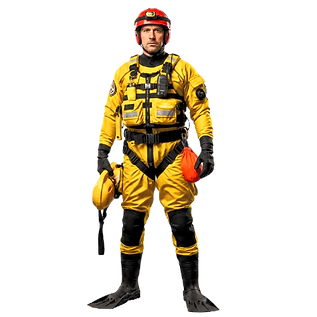
Would you be ready if the current took hold today?
Working near moving water or industrial marine sites requires more than just caution—it requires a tactical skillset.
Our intensive, field-based training programs give you the hands-on experience needed to navigate high-flow currents and complex water hazards with confidence.
From foundational shore-based safety to high-stakes technical "go" rescues, we provide the tools to ensure that when the unexpected happens, you’re the most prepared person on the scene.
We offer flexible scheduling and on-site delivery.
Advanced Rescue Boat Operator Search & Rescue
Industrial Surface Water Rescue (Ops & Tech)
Swiftwater Rescue Technician:
Industrial & Film Edition


Advanced Rescue Boat Operator Search & Rescue
In the water, the current never rests. Safety isn't a reaction; it’s a standard of precision.
Our training is built for the high-stakes reality of industrial, construction, and government field operations.
By integrating technical boat handling with rigorous search and rescue protocols, we empower operators to master motorized craft in the most unforgiving environments.
Be ready for the moment the mission turns critical with the same standards trusted by the Coast Guard and NFPA.

Industrial Surface Water Rescue (Ops & Tech)
Remote water operations demand a level of preparedness that standard training can’t touch.
Our Industrial Surface Water Course is built for crews who must act as their own first responders in the most unforgiving environments. We don’t just teach you how to survive a plunge into high-flow current; we teach you how to manage the technical extraction and the critical "Golden Hour" that follows.
Master the remote victim stabilization. From managing hypothermia in the field

Swiftwater Rescue Technician:
Industrial & Film Edition
In the film and industrial sectors, moving water isn't just a backdrop; it’s a dynamic workplace hazard.
Our Swiftwater Rescue Technician program is built for the "Non-Fire" professional who needs to maintain absolute site safety without municipal support.
We don’t just teach you how to swim; we teach you how to manage a technical rescue system in the middle of a remote production or a construction zone.
we provide the tactical skills to ensure that your project stays on schedule and your people stay safe.

Advanced Rescue Boat Operator Search & Rescue


Professional Certification for Industrial, Construction, and Government Operators
Course Description
The ARBO-SAR program is an intensive, multi-disciplinary certification designed for personnel operating in high-risk aquatic environments, including industrial work sites, bridge construction, and government field operations. This course transitions participants from basic boaters to Technical Rescue Boat Operators, specializing in precision maneuvering, victim extraction, and rigorous compliance with national safety standards.
By integrating NFPA 1006 technical standards with Transport Canada maritime regulations, this course ensures that operators are prepared for the unique demands of industrial construction, environmental monitoring, and emergency response. Candidates will master technical search patterns, victim acquisition, and the complex legalities of water-based work sites.
pricing and logistics
-
Duration: 4 Days (32–40 Hours)
-
Delivery Format: Blended Learning (10% Classroom Theory / 90% Field-Based Practical)
-
Location: Various or come to you
-
Cost: $950.00 +HST per student (Group rates available for 6+ participants)
-
Certification: Valid for 3 years. Complies with NFPA 1006/1670, S-2.1 (CNESST), and Canada Shipping Act standards.
course outline
Day 1: Legal Framework, Safety & Theory
Focus: Compliance and Technical Foundations
-
Regulatory Analysis: Review of S-2.1 and r.13 (Quebec); understanding employer obligations and the Construction Safety Code (CSTC).
-
Maritime Law: Overview of the Canada Shipping Act (2001) and Life-Saving Equipment Regulations.
-
Liability & Documentation: Incident reporting protocols for the CNSC, SAAQ, and Transport Canada.
-
NFPA 1670 Standards: Defining the rescue environment (Swiftwater vs. Stillwater) and risk/benefit analysis.
Day 2: Technical Equipment & Vessel Dynamics
Focus: The Mechanics of Rescue
-
PPE Management: Selection/maintenance of PFDs and thermal protection.
-
NFPA 1983 Systems: Introduction to life safety ropes, hardware, and mechanical advantage systems for boat-to-shore transitions.
-
Vessel Physics: Mastering buoyancy, stability, and the effects of current/wind on motorized hulls.
-
Boating Safety: Adhering to the Transport Canada Safe Boating Guide (Navigation and Collision Avoidance).
Day 3: Precision Maneuvering & SAR Tactics
Focus: On-Water Skills
-
Technical Handling: Precision docking, high-speed interception, and "station holding" in moving water.
-
Search Theory: Implementing Coast Guard (2000) patterns (Expanding Square, Sector Search, Creeping Line).
-
Propeller Management: Advanced approach techniques to ensure victim safety during acquisition.
-
Launch & Recovery: Professional trailering and launching in adverse industrial conditions.
Day 4: Advanced Scenarios & Industrial Contexts
Focus: Complex Environment Evaluation
-
Victim Acquisition: Practical "Man Overboard" (MOB) recovery, parbuckling, and unconscious victim lifts.
-
Restricted Access Zones: Operating near dams, intake pipes, and Nuclear Facilities (CNSC protocols).
-
Decontamination: Post-incident protocols for craft and personnel in contaminated or industrial runoff.
-
Final Evaluation: Practical skills check-off and written examination.
Student Equipment List
Students must provide the following to participate:
-
PFD: Type III or V (Rescue PFD with quick-release belt preferred).
-
Head Protection: Water rescue-rated helmet (ventilated).
-
Footwear: Closed-toe water shoes or boots with high-traction soles.
-
Thermal Protection: Wetsuit or Drysuit (Mandatory for spring/fall sessions).
-
Personal Gear: Whistle, waterproof flashlight, and weather-appropriate clothing.
-
Credentials: Valid Pleasure Craft Operator Competency (PCOC) card.
Certification Compliance & Standards
At the successful completion of this course, the candidate’s certification meets or exceeds the requirements of:
-
Agency / Standard Compliance Level
-
Transport Canada Matches Safe Boating Guide & Small Vessel requirements.
-
NFPA 1006 / 1670Technical Rescuer - Water Search & Rescue (Operations Level).
-
CNESST (S-2.1 / r.13)Compliant with Provincial Occupational Health & Safety.
-
Canadian Armed Forces Compatible with recognized small-craft tasking protocols.
-
CNSC Meets safety requirements for nuclear site proximity operations.
-
CSTC Safety Code for the Construction Industry compliant.
Why Choose This Program?
Our curriculum is one of the few that bridges the gap between Transport Canada boating requirements and NFPA technical rescue standards.
We ensure your team isn't just "compliant," but truly capable of saving lives in high-consequence industrial environments.

Industrial Surface Water Rescue (Ops & Tech)

In the industrial sector—where bridge construction, marine engineering, and remote resource extraction meet the water’s edge—the margin for error is zero. Advanced Rescue Solutions provides a specialized, two-day intensive program designed to equip your team with the technical skills required to manage water-related emergencies in complex, resource-limited environments.
This course is specifically engineered for private industry, moving beyond standard public safety training to address the unique hazards of construction sites, remote work camps, and industrial infrastructure projects.
Industrial Context: Unlike municipal fire training, this course focuses on limited-resource environments. We train your staff to perform rescues with the tools available on a construction site, emphasizing the use of cranes, ladders, and site-specific machinery in a rescue capacity.
Course description
This 16-hour program delivers a dual certification at the Operations and Technician levels, strictly adhering to NFPA 1006 (Standard for Technical Rescuer Professional Qualifications) and NFPA 2500 (Standard for Operations and Training for Technical Search and Rescue Incidents).
Participants will transition from shore-based safety protocols to high-stakes "Go" rescue techniques, ensuring your site remains compliant with provincial OH&S regulations and industry best practices.
Target Audience
-
Construction crews (bridge/marine)
-
Engineers
-
Remote Resource workers
-
Industrial Safety Teams
pricing and logistics
Course Fee: $595.00 + HST per person.
Duration: 2 Days (16 Hours)
course outline
Day 1: Risk Assessment & Operational Foundation
Focus: Classroom theory and "Shore-Based" operations. This ensures compliance for workers who may need to assist without entering the water.
-
Module 1: Legal & Industrial Standards
-
Overview of NFPA 1006/2500 & Provincial OH&S regulations.
-
Due diligence for employers in remote or high-risk construction environments.
-
-
Module 2: Scene Survey & Site Control
-
Identifying "Hot, Warm, and Cold" zones on an industrial job site.
-
Hydrology 101: Understanding moving water, strainers (rebar/piling), and industrial hazards (dams, intake pipes, culverts).
-
-
Module 3: PPE & Specialized Equipment
-
Industrial-grade PFDs, thermal protection (dry suits vs. wet suits), and "Industrial Water PPE" for engineers.
-
Communication: Whistle signals, hand signals, and radio protocols for remote sites.
-
-
Module 4: Shore-Based Rescue (Operations Level)
-
Talk, Reach, Throw: Utilizing throw bags and reaching tools (ladders/pike poles).
-
Tensioned diagonals and basic mechanical advantage for victim retrieval.
-
Day 2: Technician Skills & Technical Scenarios
Focus: "Go" rescues, victim management, and complex industrial scenarios. This fulfills the Technician-level requirements.
-
Module 5: Self-Rescue & Survival Swimming
-
Defensive and aggressive swimming postures.
-
Negotiating obstacles (simulated bridge pilings or construction debris).
-
-
Module 6: Contact Rescues & Victim Management (Technician Level)
-
"Go" Rescues: Swimming to a victim and managing panicked subjects.
-
Entrapment: Managing foot or torso entrapment in rocky or man-made environments.
-
-
Module 7: Watercraft & Remote Access
-
Using motorized or non-motorized craft for rescue on larger project sites.
-
Integrating with helicopter or rope rescue teams (common in remote engineering projects).
-
-
Module 8: Final Practical Evaluation (Scenario-Based)
-
Scenario A: "Man overboard" from a bridge construction platform.
-
Scenario B: Remote site worker swept into a culvert or diversion channel.
-
Assessment: Written exam (80% pass) and a Practical Skill Checkoff (JPR based).
-
Equipment Requirements for Students
-
Full Dry Suit or 5mm+ Wet Suit (Environment dependent).
-
Water Rescue Helmet & Gloves.
-
Rescue PFD (Type III or V) with quick-release harness.
-
Sturdy water-appropriate footwear.

Swiftwater Rescue Technician:
Industrial & Film Edition
(NFPA 1006/2500)

The Standard for Professional Safety in Moving Water
In the worlds of commercial film and industrial construction, "Safety" isn't a suggestion—it's a requirement. When your project moves into swiftwater environments, the standard fire department response is often too slow and too general. You need a team that is certified, competent, and ready to act the moment a line snaps or a stunt goes wrong.
Our NFPA-Compliant Swiftwater Rescue Technician course is built specifically for non-municipal responders. We skip the "firehouse fluff" and focus on the tactical realities of a working set or an active construction site.
Course Description
When the shot—or the job—depends on the water, who is protecting your crew?
In the film and industrial sectors, moving water isn't just a backdrop; it’s a dynamic workplace hazard. Our Swiftwater Rescue Technician program is built for the "Non-Fire" professional who needs to maintain absolute site safety without municipal support.
We don’t just teach you how to swim; we teach you how to manage a technical rescue system in the middle of a remote production or a construction zone. From tethered boat operations to managing "Industrial Entrapments" around pilings and set-pieces, we provide the tactical skills to ensure that your project stays on schedule and your people stay safe.
To meet the requirements for NFPA 1006 (Standard for Technical Rescuer Professional Qualifications) and NFPA 2500 (Standard for Operations and Training for Technical Search and Rescue Incidents), this curriculum is designed for the "non-fire" professional.
This 3-day (24-hour) program provides an intensive path to Technician Level certification. It is structured to satisfy provincial OH&S "Competent Person" requirements for film, television, and industrial commercial sectors.
Target Audience
-
Film Stunt/Safety Crews
-
Bridge & Dam Construction Teams
-
Environmental Engineers
-
Remote Resource Workers.
Pricing and logistics
-
Course Fee: $750.00 + HST per person.
-
Duration: 3 Days (24 Hours)
-
Certification: Swiftwater Rescue Technician (NFPA 1006/2500) (Valid for 3 years).
-
Prerequisites: Strong swimming ability; physical fitness for high-exertion tasks.
-
Delivery: Available at your project site or our designated training centers.
course outline
Day 1: Theory, Hydrology & Operational Safety
-
Module 1: Legal & Legislative Framework
-
NFPA 1006/2500 overview.
-
Industrial compliance: Ontario OH&S Act / WorkSafeBC / Film Safety Guidelines.
-
Liability and the "Duty to Act" for private industry teams.
-
-
Module 2: Industrial Swiftwater Hydrology
-
Dynamics of moving water (laminar vs. turbulent flow).
-
Hazard identification: Eddies, pillows, upstream/downstream Vs.
-
Man-made hazards: Sluice gates, bridge pilings, cofferdams, and set-pieces.
-
-
Module 3: PPE & Equipment Management
-
Selection and maintenance of industrial water rescue PPE.
-
The "Swiftwater Rescue Tool Kit" for remote sites.
-
-
Module 4: Site Control & Communications
-
Establishing Cold, Warm, and Hot zones on an active worksite.
-
Whistle, hand, and radio signals for high-noise environments.
-
Day 2: Technical Swimming & Surface Operations
-
Module 5: Self-Rescue & Defensive Swimming
-
Aggressive vs. defensive swimming postures.
-
Ferry angles and eddy entries/exits.
-
Strainer negotiation (Simulated rebar or fallen debris).
-
-
Module 6: Shore-Based Rescue (Operations Level)
-
Advanced throw-bagging techniques (dynamic and static).
-
Reach and extension tool deployments from industrial platforms.
-
Shallow water crossing techniques (Wedge, Line, and Pole).
-
-
Module 7: Medical Considerations
-
Drowning pathophysiology and cold-water shock.
-
In-water patient stabilization and management.
-
Day 3: Technical Systems & Advanced Scenarios
-
Module 8: Rope Systems for Water (Technician Level)
-
Anchors: Utilizing site machinery (cranes/trucks) and natural anchors.
-
Mechanical Advantage: 3:1 and 5:1 systems for steep-bank extraction.
-
Tensioned diagonals and stabilization lines.
-
-
Module 9: Contact & High-Risk Rescues
-
Live Bait: Tethered swimmer rescues using quick-release harnesses.
-
Managing panicked or combative subjects.
-
Vessel-Based: Rescues from small workboats or film safety craft.
-
-
Module 10: Final Scenario-Based Evaluation
-
Scenario A: Stunt/actor extraction in high-flow current.
-
Scenario B: Industrial worker entrapment in a bridge-piling zone.
-
Testing: Final JPR (Job Performance Requirement) check-off and written exam.
-
Why Choose ARS for your Team?
-
NFPA 1006/2500 Compliant: Recognized globally as the gold standard for technical rescue.
-
Small-Team Focus: We teach you how to effect a rescue with the 3 or 4 people on your crew, not a 12-person fire company.
-
Resource Integration: We teach your safety leads how to turn site machinery and production equipment into effective rescue anchors.
-
Legislative Peace of Mind: Our curriculum satisfies OH&S requirements for "competent rescue personnel" in high-risk environments.
Technical & Legislative Compliance
-
NFPA 1006 (Chapter 18): Full alignment with Swiftwater Technician JPRs.
-
OH&S Standards: Meets the requirements for "Rescue of Persons at Risk of Drowning" (e.g., Ontario Reg 213/91 for Construction).
-
Certification: NFPA-Compliant Technician Certificate